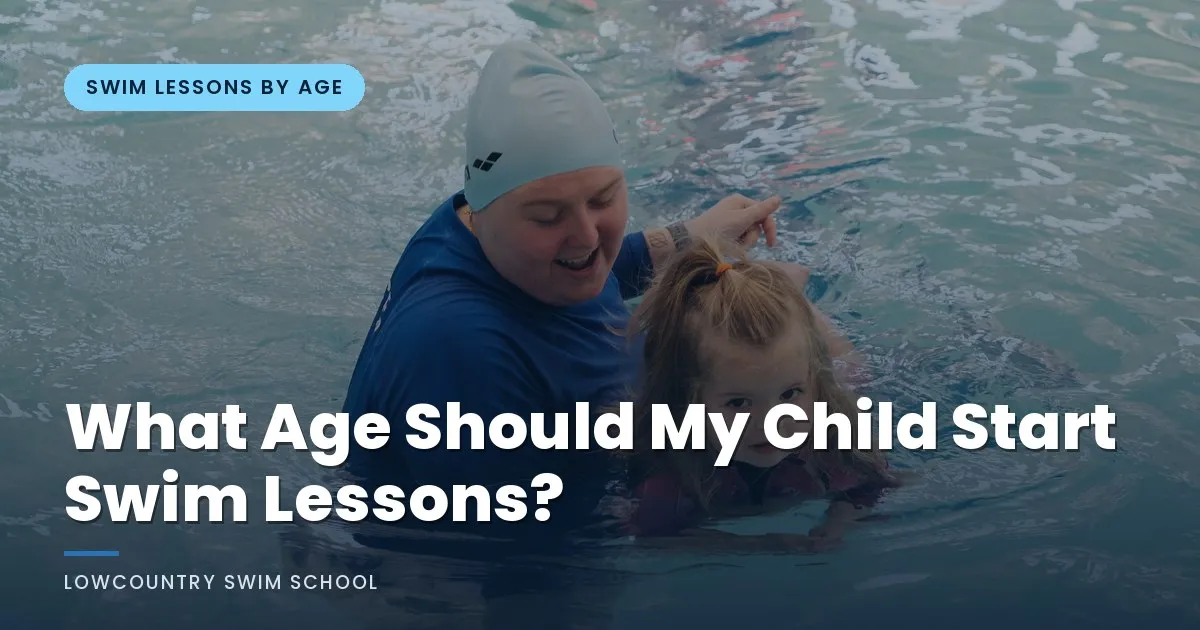
What Age Should My Child Start Swim Lessons?
What Age Should My Child Start Swim Lessons?
A warm, honest guide from LowCountry Swim School in Charleston to help you decide when the time is right for your child, and why it is never too early or too late to learn.
Register your swimmer →It is one of the most common questions we hear from Charleston parents: what is the right age to start swim lessons? The honest answer is that there is no single magic number. Children can benefit from the water at almost any age, and the best time to start is usually sooner than most parents expect. What matters most is matching the lessons to your child's stage of development, keeping every experience positive, and never treating water safety as something that can wait.
Water is a big part of life here in the Lowcountry, from backyard pools to the harbor and the beach. That makes early comfort and safety in the water more than a nice skill to have. In this guide we walk through what to expect at each age, the readiness signs to look for, and why swimmers of every age, including adults, are welcome to begin.
Not sure which program fits your child's age?
We group lessons by stage so every swimmer learns at the right pace. Explore our baby and toddler swim lessons in Charleston for the youngest swimmers, our kids swim lessons for preschool and school age children, or adult swim lessons if you never learned as a child. Not sure? Reach out and we will point you to the right fit.
Babies: water acclimation from around 6 months
For the very youngest swimmers, lessons are not about learning strokes. They are about gentle water acclimation. Many families begin parent and child classes around 6 months of age, once a baby has good head and neck control. At this stage, you are in the water with your child the entire time, which builds trust and makes the whole experience feel safe and playful.
These early classes focus on comfort, not performance. Instructors guide you through holds, gentle back floating with support, blowing bubbles, and simple songs and cues that help your baby associate the water with fun and closeness. Over time these small habits build a foundation of comfort that makes later swimming come far more naturally.
- You are always in the water with your baby, so there is no separation stress.
- The goal is comfort and safety awareness, not swimming independently.
- Warm water and short, playful sessions keep babies happy and engaged.
You can learn more about what these early classes look like in our guide to baby and toddler swim lessons in Charleston.
Toddlers: building confidence and water safety
The toddler years, roughly ages 1 to 3, are a wonderful window for growth. Toddlers are curious, active, and eager to explore, which makes them natural learners in the water. Lessons at this stage still often include a parent, and they begin to introduce foundational water safety skills alongside plenty of play.
At this age, instructors work on skills like reaching for the wall, turning back to a safe edge, kicking, and getting comfortable with water on the face. These are not just fun milestones. They are the early building blocks of the safety skills that can make a real difference around water. Consistency matters more than intensity here, so regular, low pressure lessons tend to produce the best results.
Preschool and school age: signs your child is ready
Somewhere around ages 4 and up, many children are ready for more structured lessons where they work directly with an instructor and start developing real swimming technique. Every child is different, so rather than focusing only on the number of birthday candles, look for signs of readiness.
Follows simple directions
Your child can listen to and follow short instructions from an adult who is not you.
Comfortable separating
They can spend a short lesson with an instructor while you watch nearby.
Enjoys the water
They are curious and happy around water rather than fearful or resistant.
Growing independence
They can try new things on their own with gentle encouragement.
If your child is not showing all of these signs yet, that is completely normal. A good instructor meets a child where they are and helps build the missing pieces. You can read more about how structured lessons progress in our overview of kids swim lessons in Charleston.
It is never too late: older children and adults
If your child is 8, 10, or well into their teens and has not learned to swim yet, please do not feel that you have missed the window. There is no age at which it becomes too late to learn. Older beginners often progress quickly because they can understand instructions, focus, and practice with intention.
The same is true for grown ups. Many adults never had the chance to learn as children, and some carry a real fear of the water. We teach adults every day, in a patient and private setting, and it is deeply rewarding to watch someone gain a skill they thought was out of reach. If that describes you or someone in your family, our guide to adult swim lessons in Charleston is a great place to start.
Why water safety comes first at every age
Whatever age your child begins, the most important reason to start swim lessons is safety. Drowning is one of the leading causes of injury related death for young children, and it can happen quickly and quietly. That is a sobering fact, but it is also the reason we teach the way we do.
Swim lessons are one layer of protection, and they work best alongside other layers. Formal lessons can help reduce the risk of drowning, and they give children skills and awareness that stay with them for life. At the same time, no child is ever truly drown proof, so lessons should always be paired with the essentials below.
Constant, close supervision
An attentive adult should always be watching young children in and around water, without distractions like phones.
Barriers and layers
Pool fences, gates, and covers add protection between children and the water when no one is swimming.
Ongoing swim lessons
Regular lessons build water safety skills and swimming ability that grow stronger over time.
So what is the right age to start?
If we had to sum it up: the best age to start swim lessons is now, matched to your child's stage. Babies can begin gentle acclimation around 6 months, toddlers thrive on playful safety focused lessons, preschool and school age children are ready for real technique, and older children and adults can absolutely learn too. The right lesson simply meets your swimmer where they are and keeps the experience positive so they want to come back.
If you are still unsure, that is exactly what we are here for. Tell us your child's age and comfort level, and we will help you choose the class that fits.
Frequently asked questions
What is the youngest age you can start swim lessons?
What is the best age for a child to start formal swim lessons?
Is my child too old to learn to swim?
Do swim lessons make my child safe from drowning?
Related reading
Ready to get your swimmer started?
Whatever their age, we will help you find the right class and pace so learning to swim feels safe, positive, and fun.
Register your swimmer →